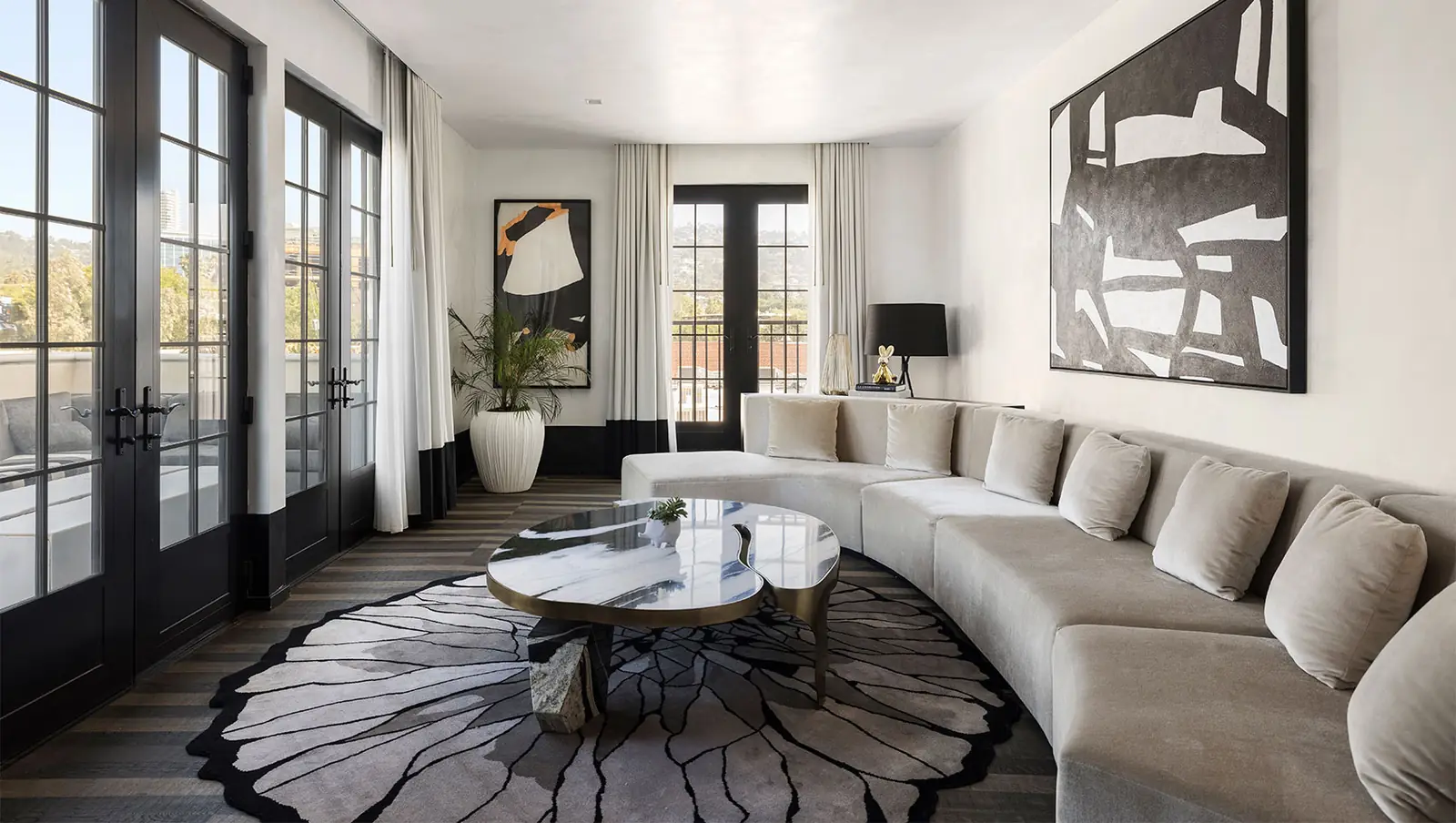
Best Penthouse Suites for Executive Stays: Expert Venue Guide
Navigating the corporate housing landscape for leadership-level delegations requires looking past standard hospitality marketing to examine how structural security, acoustic isolation, and vertical transport efficiency intersect. Across major financial hubs, top-floor commercial accommodations function as mission-critical nodes where global enterprises execute sensitive mergers, host international boards, and manage high-stakes strategic initiatives under intense scrutiny.
The necessity for specialized executive lodging stems from the convergence of corporate security mandates, the proliferation of remote-hybrid governance models, and the demand for uncompromised privacy. Modern organizations no longer select properties based purely on aesthetic novelty or central zip codes. Instead, identifying the best penthouse suites for executive stays requires rigorous technical evaluation of encrypted communication infrastructure, structural fire safety compliance, and dedicated service hoistways that bypass public guest traffic.
Assessing these high-altitude assets demands an analytical look at the mechanical frameworks governing supertall real estate. From managing multi-zone climate control under intense solar gain to coordinating discrete secure arrival ports that insulate executives from public exposure, successful executive hosting requires seamless cross-disciplinary oversight. Understanding these operational realities provides a clear window into how modern corporations manage elite hospitality, risk mitigation, and executive productivity hundreds of feet above the street grid.
Understanding “best penthouse suites for executive stays”

The phrase best penthouse suites for executive stays is frequently commercialized across luxury travel blogs as a vague designation for any top-floor hotel room featuring panoramic views and an oversized desk. In professional corporate procurement, security management, and high-end asset administration, however, the scope of the best penthouse suites for executive stays is profoundly technical. It denotes architecturally hardened, acoustically isolated, and digitally secure vertical environments capable of hosting high-net-worth leadership teams, sovereign delegations, and corporate boards under conditions of absolute operational discretion.
Evaluating these specialized properties requires understanding the systemic friction between high-capacity corporate collaboration and rigid municipal life-safety regulations. For instance, hosting an international board meeting with twenty participants requires calculating floor-load capacities, temporary power distribution thresholds for audio-visual arrays, and secure network bandwidth stability. Planners who ignore these operational realities often mistake superficial interior finishes for true functional capability.
Deep Contextual Background
The trajectory of corporate executive lodging in the United States mirrors shifts in global commerce, corporate governance standards, and high-rise structural engineering. During the early twentieth century, major corporations hosted leadership retreats and board sessions in dedicated downtown hotel ballrooms or private club suites, keeping upper floors strictly residential or private. As international commerce accelerated and supertall skyscrapers reshaped urban skylines, top-floor properties transformed into expansive multi-level retreats designed to serve as secondary corporate headquarters.
The late twentieth and early twenty-first centuries introduced the modern mixed-use mega-tower, where developers combined luxury penthouses with five-star hotel operations and secure private residential syndicates. This evolution was accelerated by advancements in smart building automation, cryptographic network security, and strict post-9/11 executive protection protocols. Today, identifying the best penthouse suites for executive stays requires navigating this mature operational landscape, where properties must balance architectural grandeur with uncompromising security hardening, digital privacy compliance, and seamless multi-agency coordination.
Conceptual Frameworks and Mental Models
Analyzing the operational efficiency and spatial hierarchy of elevated corporate suites relies on several structured mental models:
-
The Secure Communication Shield Matrix: Evaluates the radio-frequency attenuation and cryptographic integrity of perimeter walls relative to potential electronic eavesdropping risks.
-
The Vertical Transit Security Index: Measures the latency, exclusivity, and access-control reliability of dedicated service and passenger elevator hoistways during executive arrival peaks.
-
The Structural Load-Allocation Model: Assesses cumulative weight thresholds of temporary board staging, heavy cryptographic servers, and executive staff density against building live-load limits.
-
The Acoustic Isolation Continuity Principle: Quantifies the physical integrity of sound-baffling assemblies separating executive conference areas from hotel technical cores.
Key Categories or Variations
| Executive Suite Category | Primary Operational Focus | Core Logistical Trade-off |
| The Secure Boardroom Sky-Suite | Hardwired encrypted comms, formal seating, and presentation tech | Rigid formal layout limiting dynamic social or networking circulation |
| The Diplomatic Sovereign Duplex | Multi-zone security perimeters and separate staff quarters | Complex internal circulation paths and heavy security overhead |
| The Extended-Stay Sovereign Lease | Long-term corporate housing with full housekeeping integration | High staff rotation frequency and internal privacy management |
| The Tech-Forward Innovation Loft | High-bandwidth redundant fiber and collaborative workspace zoning | High electrical power draw and intense thermal management loads |
| The Coastal Executive Pavilion | Indoor-outdoor executive staging with panoramic views | Severe exposure to coastal wind pressure and solar heat gain |
| The Historic Heritage Crown Suite | Distinctive architectural prestige and central downtown access | Outdated MEP risers limiting modern IT infrastructure upgrades |
When applying decision logic to these variations, corporate travel directors and executive protection teams must align property selection with strategic objectives. For instance, confidential mergers require secure boardroom sky-suites equipped with cryptographic communication nodes and sound-masking insulation. Conversely, long-term corporate product launches benefit from extended-stay sovereign leases, provided auxiliary power distribution and robust data redundancy are actively verified.
Detailed Real-World Scenarios
Resolving Secure Network Bandwidth Deficits During a Global Board Meeting in Chicago
An enterprise technology team prepares a prominent Chicago penthouse suite for a high-stakes multi-national board meeting involving real-time financial trading and video transmission.
-
Constraint: The building’s standard public guest Wi-Fi network experiences frequent packet loss and lacks the encryption parameters required by corporate cybersecurity policy.
-
Failure Mode: Relying on unsecured public infrastructure exposes sensitive financial data to interception, violating corporate compliance mandates.
-
Decision Point: Partner with building IT to drop a dedicated, fiber-optic direct line straight from the telecommunications riser into a temporary server rack installed in the penthouse service closet.
Managing Elevator Security Protocols for a Ministerial Delegation in Manhattan
A corporate security director manages arrival logistics for a visiting executive committee occupying a top-floor luxury duplex in Manhattan.
-
Constraint: The building shares a single passenger elevator bank between permanent residents and hotel guests, risking unauthorized proximity to executives.
-
Failure Mode: Unvetted individuals entering the elevator car alongside executive leadership compromise physical security perimeters.
-
Decision Point: Program a secure destination-dispatch keycard override that locks out intermediate floors, transporting executives directly from the private motor court to the penthouse foyer.
Planning, Cost, and Resource Dynamics
Executing comprehensive housing strategies for elite executive delegations involves substantial capital outlays and complex recurring operational expenditures. The financial model requires balancing massive upfront security retainers and specialized IT deployments against the protection of sensitive corporate assets.
| Economic Variable | Financial Variability | Strategic Impact on Executive Stays |
| Encrypted IT and Redundant Fiber Installation | High Upfront | Prevents data breach risks and ensures flawless communication |
| Dedicated Executive Protection and Transport | Fixed Retainer | Guarantees physical security and mitigates leadership exposure |
| High-Altitude Catering and Staging Support | Moderate Scale | Compensates for complex vertical transport logistics and prep friction |
| Venue Indemnity and Corporate Insurance | Variable Risk | Protects organizations against property damage or liability claims |
Tools, Strategies, and Support Systems
-
Encrypted Satellite Communication Backups: Portable high-bandwidth terminals deployed to maintain connectivity during building-wide internet outages.
-
Dedicated Service Lift Intercoms: Hardwired communication lines linking executive suites directly to ground-level security and loading docks.
-
Acoustic Decoupling Sound-Masking Units: Portable electronic white-noise generators deployed around conference tables to prevent audio eavesdropping.
-
High-Altitude Meteorological Forecasting Feeds: Real-time data platforms tracking barometric pressure and wind-shear velocity to manage outdoor terrace security.
-
Automated Keycard Access Zoning Software: Digital programming tools that restrict elevator car access to authorized executive protection personnel.
Risk Landscape and Failure Modes
The primary hazard inherent in executing executive stays involves unmitigated communication and power failures during critical operational windows. When corporate teams fail to verify backup generator capacity, sudden building-wide electrical anomalies can instantly cut power to servers and video conferencing arrays, derailing multi-million-dollar negotiations. Furthermore, overlooking physical security access vulnerabilities can expose leadership to unauthorized media or public intrusion.
An internal operational failure mode involves acoustic bleed affecting neighboring occupants during confidential discussions. Penthouses that host high-volume strategy sessions without checking sound transmission class ratings risk intellectual property leakage through shared architectural partitions. Unprepared administrative planners quickly discover that high-altitude exclusivity does not replace rigorous physical and digital security protocols.
Governance, Maintenance, and Long-Term Adaptation
Maintaining optimal operational readiness across corporate housing portfolios requires a disciplined administrative cadence. Corporate travel directors must institute rigorous pre-stay audits of IT infrastructure, security access logs, and mechanical climate control systems. If audit data indicates network latency or HVAC temperature fluctuations, management must immediately overhaul the technical deployment parameters.
Furthermore, corporate procurement teams must transition from reactive troubleshooting to proactive logistical standardization. This involves partnering with building management and security consultants to establish comprehensive technical riders for every approved property. Proactive governance safeguards executive productivity and ensures absolute discretion during sensitive stays.
Measurement, Tracking, and Evaluation
-
Network Uptime and Bandwidth Stability: Measures data transmission speed, packet loss rates, and redundancy activation frequency during executive stays.
-
Security Access Compliance Rate: Tracks the occurrence of unauthorized access attempts, keycard override failures, or perimeter breaches.
-
Climate and Acoustic Comfort Index: Quantifies interior decibel stability, air pressure equilibrium, and thermal consistency across executive zones.
-
Logistics and Ingress Latency: Evaluates the average time elapsed between executive arrival at the motor court and entry into the secure suite.
Common Misconceptions and Oversimplifications
-
Myth: Renting an expensive penthouse automatically includes enterprise-grade cybersecurity and encrypted communications. Reality: Luxury penthouses are designed for hospitality or residential living, requiring dedicated IT deployment and secure network drops for executive use.
-
Myth: Standard hotel keycard systems provide adequate security isolation for high-net-worth leadership teams. Reality: Executive stays require custom destination-dispatch programming and dedicated security detail staging to prevent unauthorized proximity.
-
Myth: High-speed elevators can effortlessly accommodate unannounced surges of executive staff and security details without scheduling. Reality: Hoistway capacities are strictly rationed, requiring rigid logistical coordination to prevent transit bottlenecks.
-
Myth: Outdoor penthouse terraces are universally suitable for secure executive conversations without electronic surveillance risks. Reality: High-altitude line-of-sight exposure and long-range telephoto equipment create significant eavesdropping vulnerabilities.
-
Myth: In-suite kitchenettes can support complex catering operations for executive dinners without external staging. Reality: High-end corporate hosting requires dedicated technical preparation areas and service lift access to prevent friction.
-
Myth: Acoustic privacy in top-floor penthouses is guaranteed by concrete slab construction. Reality: Floor-to-ceiling glass curtain walls and open floor plans transmit sound easily, requiring specialized acoustic dampening.
Ethical, Practical, or Contextual Considerations
The practical curation and management of ultra-luxury executive stays also intersects heavily with labor ethics, fair wage distribution, and local community impact. When corporate groups host massive gatherings relying on grueling, uncompensated shifts for backstage staging, culinary, and security personnel, operational sustainability suffers. Progressive organizations prioritize fair compensation, rigorous safety training, and transparent scheduling for all trade and hospitality personnel. Balancing executive exclusivity with responsible operational management ensures long-term organizational reputation and civic respect.
Conclusion
Mastering the complexities involved in identifying and evaluating the best penthouse suites for executive stays requires an uncompromising synthesis of digital security literacy, logistical foresight, and rigorous administrative protocol. True authority in this domain involves looking past glossy marketing imagery to assess cryptographic network redundancy, hoistway access control, and structural acoustic isolation.