Best Penthouse Suites for Digital Nomads: Expert Guide
The contemporary landscape of remote knowledge work has fundamentally transformed the intersection of high-end real estate and mobile professional lifestyles. For senior technologists, enterprise founders, and high-earning independent consultants, the traditional boundary between vacation hospitality and functional home-offices has dissolved completely. Identifying the best penthouse suites for digital nomads requires evaluating properties that merge top-tier architectural luxury with robust technological infrastructure, dedicated ergonomic workspaces, and secure high-speed connectivity across global hubs. These high-altitude living spaces provide more than scenic views; they serve as mission-critical command centers for distributed leadership teams operating across multiple time zones.
Selecting and maintaining a high-performance remote workspace at the penthouse tier involves navigating complex logistical supply chains, specialized acoustic isolation engineering, and strict data security protocols. Unlike standard long-term rentals or co-living spaces designed for casual travelers, top-floor corporate sanctuaries must deliver enterprise-grade redundancies, including secondary fiber-optic internet lines, uninterrupted power supplies, and secure local area networks. When distributed technology executives or remote venture partners evaluate these premium assets, they engage with sophisticated property managers who understand the demanding workflow requirements of location-independent professionals.
Analyzing this asset class requires examining structural typologies, digital infrastructure overhead, and the strategic planning necessary to maintain long-term productivity in foreign jurisdictions. From evaluating redundant satellite backup connections in remote island hubs to understanding cross-border tax compliance for international remote workers, successful operation demands deep cross-disciplinary oversight. Understanding these mechanics illuminates how the premier properties in this sector maintain their technical resilience, ergonomic integrity, and commercial appeal for modern knowledge workers.
Understanding “best penthouse suites for digital nomads”
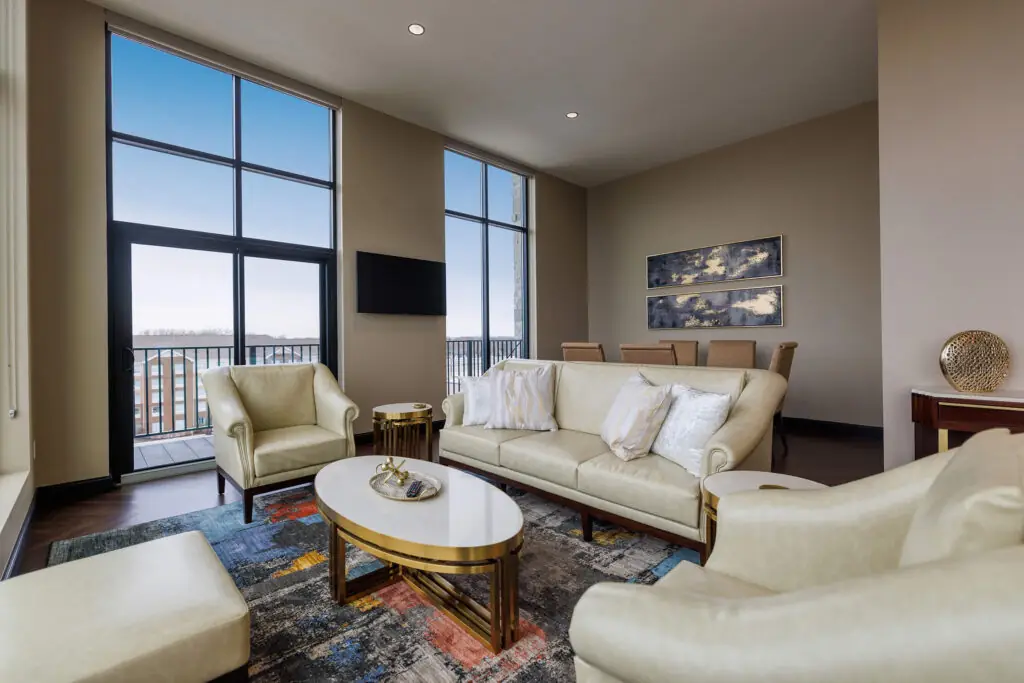
The phrase best penthouse suites for digital nomads is frequently co-opted by travel marketing agencies to describe any luxury top-floor apartment with basic Wi-Fi and a laptop desk. In professional remote operations, architectural appraisal, and high-end corporate asset management, however, evaluating the best penthouse suites for digital nomads demands a rigorous examination of redundant fiber bandwidth, dedicated acoustic privacy, and ergonomic zoning. A common oversimplification treats any expensive hotel suite as a functional workspace, ignoring how true professional productivity requires acoustic separation between entertainment areas and video-conferencing zones, alongside secure hardware firewalls.
Evaluating these properties requires understanding the systemic tension between leisure-oriented hospitality design and rigorous professional functionality. For instance, a glass-walled penthouse in downtown Singapore may offer breathtaking panoramic city views, yet it simultaneously presents severe acoustic echo issues and intense solar heat gain that disrupts video calls and overheats sensitive computer hardware. Analysts who ignore these physical and technical constraints often mistake surface-level aesthetic luxury for true workspace utility. Mastering the complexities of the best penthouse suites for digital nomads involves examining how interior architects and IT consultants collaborate to deliver enterprise-grade reliability within elite residential environments.
Deep Contextual Background
The evolution of remote work infrastructure mirrors the broader globalization of knowledge industries and the rapid advancement of cloud computing. Throughout the early decades of the twenty-first century, location-independent professionals were largely restricted to shared co-living spaces, coffee shops, or standard mid-tier apartments. These environments frequently suffered from unreliable internet connections, intrusive ambient noise, and inadequate ergonomic setups, limiting their suitability for deep, uninterrupted technical work or sensitive corporate communications.
As high-earning digital professionals, remote founders, and distributed engineering leads matured, their demands shifted toward uncompromising physical and digital environments. This market maturation catalyzed the development of specialized top-floor residences equipped with enterprise-grade data infrastructure, professional lighting setups, and private boardroom facilities. Today, identifying the best penthouse suites for digital nomads requires navigating a specialized sector where cryptographic security, acoustic engineering, and high-altitude luxury converge to support the demands of modern mobile enterprises.
Conceptual Frameworks and Mental Models
Analyzing the efficiency, technological readiness, and operational viability of elite remote workspaces relies on several structured mental models:
-
The Bandwidth Redundancy Index: Measures the availability of primary and secondary independent internet feeds, ensuring zero downtime during critical deployments or investor calls.
-
The Acoustic Isolation Gradient: Evaluates the suppression of external street noise and internal HVAC rumble across primary video-conferencing zones.
-
The Ergonomic Zoning Ratio: Assesses the physical separation between deep-focus workstations, collaborative meeting spaces, and domestic relaxation areas.
-
The Jurisdictional Connectivity Matrix: Quantifies the latency, firewall restrictions, and data privacy regulations associated with remote access points in different global regions.
Key Categories or Variations
| Nomadic Penthouse Category | Primary Geographic Context | Core Operational Trade-Off |
| Metropolitan Tech Hub Penthouses | Financial capitals like Tokyo, London, and New York | Ultra-fast fiber infrastructure and financial proximity balanced against high baseline costs |
| Emerging Nomad Metropolises | Dynamic hubs like Bangkok, Lisbon, and Medellin | Exceptional lifestyle value and local infrastructure offset by occasional local power grid instability |
| Coastal Pacific Tech Enclaves | Coastal towers across California and the Pacific Northwest | Immersive natural scenery and robust tech ecosystems paired with aggressive municipal zoning costs |
| Alpine Remote Sanctuaries | High-altitude mountain bases in Switzerland and Colorado | Inspiring isolation paired with heavy reliance on specialized satellite internet redundancies |
| Island Digital Free-Zones | Island jurisdictions offering specialized nomad visas and tax structures | Favorable regulatory frameworks offset by complex international logistics and supply chains |
| Historic Urban Loft Conversions | Restored industrial high-rises across European cultural centers | Rich architectural character balanced against retrofitted cabling and structural wiring limits |
When applying decision logic to these variations, remote founders and independent executives must align their workspace choices with their specific operational risk tolerance. Metropolitan tech hubs provide unbeatable fiber-optic redundancy and direct access to venture networks, but they carry steep carrying costs. Conversely, emerging nomad metropolises offer exceptional financial value and vibrant local communities, but they require careful due diligence regarding local power stability and secure data routing.
Detailed Real-World Scenarios
Securing Enterprise-Grade Redundancy in a Southeast Asian Metropolitan Penthouse
A remote CTO of a distributed software firm establishes a three-month operational headquarters in a Bangkok skyscraper penthouse.
-
Constraint: The firm requires ninety-nine point nine percent uptime for managing live server deployments, but the local municipal grid experiences occasional tropical storm surges.
-
Failure Mode: A sudden afternoon power outage knocks out the building’s primary router during a critical database migration, halting global engineering operations.
-
Decision Point: Install an uninterruptible power supply (UPS) paired with a secondary Starlink satellite backup dish on the private terrace, bypassing building-wide Wi-Fi bottlenecks.
Managing Cross-Time-Zone Acoustic Isolation in a European Loft Penthouse
A venture capital partner operates out of a historic open-plan penthouse loft in Lisbon while managing North American portfolio companies.
-
Constraint: Conducting late-night board meetings conflicts with domestic noise restrictions and echoes across the high-ceilinged timber-framed living space.
-
Failure Mode: Persistent acoustic reverberation degrades voice clarity during high-stakes video negotiations, frustrating institutional investors.
-
Decision Point: Construct a dedicated, soundproofed glass acoustic pod within the penthouse floor plate, outfitted with specialized studio-grade acoustic wall paneling.
Planning, Cost, and Resource Dynamics
Acquiring and maintaining top-tier workspaces for remote operations involves substantial capital commitments that extend far beyond standard rental agreements. The financial model requires balancing premium nightly or monthly tariffs against the economic value of uninterrupted productivity, secure data transmission, and executive wellness.
| Economic Variable | Financial Variability | Strategic Impact on Remote Asset Management |
| Dedicated Enterprise Fiber Installation | Moderate Fixed Capital | Ensures high-speed symmetrical upload and download speeds for heavy data tasks |
| Specialized Acoustic and Ergonomic Retrofitting | Variable Capital Outlay | Protects long-term physical health and optimizes video-conferencing professionalism |
| Comprehensive Cybersecurity and VPN Hardware | Low Fixed Operational Cost | Safeguards intellectual property and proprietary codebases across foreign networks |
| On-Demand Administrative and Concierge Support | Flexible Monthly Fee | Offloads local errand friction to free up valuable deep-work hours for founders |
Tools, Strategies, and Support Systems
-
Enterprise-Grade Hardware Firewalls and Routers: Encrypted local network hardware protecting remote devices against local network sniffing and man-in-the-middle attacks.
-
Hardware-Based Redundant Cellular Gateways: 5G failover routers maintaining high-speed cellular data streams if primary fiber lines experience packet loss.
-
Acoustic Diagnostic and Calibration Software: Digital tools measuring room reverberation and optimizing microphone input clarity for virtual meetings.
-
Cloud-Synced Ergonomic Asset Inventories: Portable standing desk converters and mechanical keyboards shipped globally to match remote workspace ergonomics.
-
Encrypted Remote Access Management Portals: Zero-trust network access (ZTNA) protocols securing data traffic between penthouse terminals and corporate cloud infrastructure.
Risk Landscape and Failure Modes
The primary hazard inherent in operating high-end workspaces across international jurisdictions involves compromising cybersecurity and data privacy. When remote professionals connect to unsecured local networks or utilize public building Wi-Fi in high-rise towers, proprietary algorithms, financial ledgers, and client data become vulnerable to interception. Implementing strict hardware-level virtual private networks and encrypted local firewalls is essential.
Another compounding risk relates to unexpected infrastructure failure in foreign operating environments. Relying on property management claims about “high-speed internet” without performing independent speed and latency audits frequently leads to operational emergencies. Failing to verify dedicated fiber lines before signing long-term leases can severely disrupt business operations for remote teams.
Governance, Maintenance, and Long-Term Adaptation
Sustaining the operational efficiency and technical readiness of elite nomad workspaces requires a disciplined administrative cadence. Digital executives and remote operations directors must institute rigorous weekly network audits, checking latency, packet loss, and firewall integrity. If diagnostic data indicates degrading bandwidth or hardware obsolescence, management must immediately upgrade local routers or coordinate with regional internet service providers.
Furthermore, remote workspace strategies must adapt to shifting global visa regulations, tax residency thresholds, and cybersecurity compliance frameworks. This involves maintaining ongoing relationships with international legal advisors, tracking nomad visa policy changes across target countries, and updating travel security playbooks. Proactive governance safeguards intellectual property and ensures seamless business continuity across international borders.
Measurement, Tracking, and Evaluation
-
Network Uptime and Latency Ratio: Measures the stability, ping times, and data transfer speeds of primary and backup internet connections.
-
Deep Work Hours-to-Interruption Index: Tracks daily productivity by quantifying hours spent in uninterrupted flow state relative to environmental distractions.
-
Ergonomic Health and Comfort Score: Evaluates physical well-being, posture fatigue, and musculoskeletal strain during extended remote work sessions.
-
Cybersecurity Incident-Free Audit Score: Quantifies the total absence of network intrusions, data leaks, or compromised access credentials during stays.
Common Misconceptions and Oversimplifications
-
Myth: Any luxury penthouse advertising “high-speed Wi-Fi” is automatically equipped for professional remote software engineering. Reality: Commercial hotel and residential Wi-Fi networks frequently suffer from heavy packet loss, bandwidth throttling, and insecure shared routers unsuited for enterprise tasks.
-
Myth: Digital nomads can work productively from any scenic vacation rental without specialized ergonomic furniture. Reality: Lacking proper standing desks, monitor arms, and ergonomic seating leads rapidly to physical fatigue and diminished output.
-
Myth: International data security is fully protected by standard consumer operating system privacy settings. Reality: Operating across foreign municipal networks requires dedicated hardware routers, encrypted VPNs, and zero-trust security architectures.
-
Myth: Urban penthouse living guarantees absolute quiet and privacy for high-stakes corporate communications. Reality: High-rise glass curtain walls frequently amplify street traffic noise and indoor acoustic echo unless specifically mitigated with soundproofing.
-
Myth: Setting up redundant internet connections in a foreign penthouse is prohibitively complex and unnecessary. Reality: Secondary cellular and satellite failover systems are easily deployed and essential for preventing catastrophic downtime.
-
Myth: Nomad visa regulations permit uninterrupted remote work from any luxury property worldwide without tax compliance risks. Reality: Local tax authorities enforce strict physical presence limits and permanent establishment rules that require careful legal monitoring.
Ethical, Practical, or Contextual Considerations
The widespread adoption of mobile remote work and the search for premium global workspaces also intersects heavily with local housing affordability, municipal zoning debates, and community dynamics in destination cities. As affluent digital professionals acquire or lease luxury properties in cultural capitals and emerging nomad hubs, local rental markets frequently experience inflationary pressure and displacement challenges. Progressive remote operators address these concerns by supporting local co-working incubators, paying fair local market rates, complying strictly with municipal short-term rental laws, and contributing to regional civic projects. Balancing professional mobility with community respect ensures the long-term social harmony and legal stability of the global remote workforce.
Conclusion
Mastering the complexities involved in identifying, equipping, and managing the best penthouse suites for digital nomads requires an uncompromising synthesis of enterprise IT infrastructure, ergonomic engineering, and operational risk management. True authority in this domain involves looking past scenic promotional photography to rigorously audit bandwidth redundancies, acoustic isolation profiles, and cybersecurity safeguards.